

The discovery of PDE5 inhibitors in the treatment of Pulmonary Hypertension
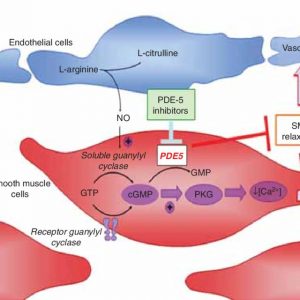
- PDE5 inhibitors were originally developed to treat erectile dysfunction, but it was soon discovered that they also had beneficial effects in patients with PH.
- PDE5 inhibitors work by blocking the breakdown of cyclic guanosine monophosphate (cGMP), a signaling molecule that plays a key role in vasodilation (the widening of blood vessels). By increasing cGMP levels, PDE5 inhibitors relax the pulmonary arteries, which lowers blood pressure in the lungs.
- The first PDE5 inhibitor to be approved for the treatment of PH was sildenafil (Revatio) in 2005.
- Sildenafil was shown to improve exercise capacity and quality of life in patients with PH, and to slow the progression of the disease.
- Since then, another PDE5 inhibitor, tadalafil (Adcirca), has also been approved for the treatment of PH.
- PDE5 inhibitors are generally safe and well-tolerated medications. However, they can cause side effects such as headache, flushing, and dizziness. In rare cases, PDE5 inhibitors can also cause serious side effects such as vision problems and heart attack.
- The discovery of PDE5 inhibitors has had a major impact on the lives of patients with PH globally as it is PDE5 inhibitors are now first-line therapy for many patients with PH
Some important dates
- 1998: Sildenafil is approved for the treatment of erectile dysfunction.
- 1998 The first suggestion to use Sildenafil in PHT
- 1999 The first proof of concept trail of use of sildenafil in pulmonary hypertension
- 2001: Researchers report that sildenafil improves exercise capacity in patients with PH.
- 2004 the result of SUPET study showing positive effect.
- 2005: Sildenafil is approved for the treatment of PH.
- 2009: Tadalafil is approved for the treatment of PH.
Action plan
- xxxxx
- fffff
- gggggg
- etc
Project’s Who is who
- Ghazwa Butrous
- fffff gg gg , MD
- tttttt fddfdfdf df


